Tuesday, 28 February 2012

Michael (2011)

“WHAT THE FUCK IS WRONG WITH EVERYONE IN AUSTRIA. SERIOUSLY.”
                            - Mike D’Angelo
D’Angelo’s above tweet after watching Michael (2011) at Cannes Festival, although not quite politically correct, conveys the difficult to describe feeling that makes you question why you would torture yourself by voluntarily watching something with this sort of subject matter.
Markus Schleinzer is better known as a casting director, however he has now tried his hand at directing and his debut, Michael premiered at Cannes to mixed reviews. 
Michael is about a man, unsurprisingly, called Michael. He wakes up every morning and drives to work selling insurance. He drives home and cooks dinner. His day seems to generally follow a routine. His routine differs from the norm, however, because he keeps a young boy locked in his basement. The relationship with the boy at times appears to be almost paternal, but there are serious implications of sexual abuse throughout, and the boy, Wolfgang, fights, kicks and screams at almost any opportunity he has. The situation appears to have been inspired by the famous Fritzel and Kampusch cases, which only serves to make the narrative more disturbing. The fact that this fictional film has its roots firmly in reality is also established in its plain, almost voyeuristic film style. There are only diegetic sounds, the only time we hear a song that isn’t being played from within the film is over the credits. The shots are generally all mid-shots, avoiding close-ups or establishing shots. There is no fast paced editing, no dissolves of image or sound making the transition from shots and scenes incredibly obvious. Nothing is clarified for the audience through cinematic trickery which supplements the idea of voyeurism.
Although he has little to no social skills, Michael is able to blend into his surroundings, he’s able to hold down a job and even be considered for a promotion, and he’s clearly known in and around his neighbourhood, enough to have short conversations with people in the neighbourhood. Michael, while not obviously attempting to fear-monger, points out that a paedophile could be living behind any door in your neighbourhood, unknown to you, or even their family.
One of the key aspects of the film is the relationship between Michael and Wolfgang, his young captive. The reason that this key aspect is so interesting is because if you put aside the locked doors and the molestation, the relationship is almost paternal, with day trips, Christmas spent together, dinner eaten together, washing up and despite all of Wolfgang’s attempts of kicking and screaming behind closed doors, he acts docile and causes no scenes outside of the house, when he has the best opportunity of escape. This is not to say that Wolfgang has Stockholm syndrome, because it’s clear that he feels no love for his captor, but the relationship is certainly an interesting one.
Despite the opening statements of this review and the subject matter, the film achieves an appearance of banality. The bland routine that Michael has (not including his fetish of imprisoned children), mixed with the unexciting film’s style make for an almost forgettable film. The audience are unable to relate to either character, although we can sympathise with the young Wolfgang, we know nothing of his past; all we see is his current suffering, which makes empathy almost impossible. Even if we ignore the child molestation that seems to be the driving force for Michael, he seems to have very few social skills, and with the exception of his family, has little to talk about past the small talk of short encounters. However there are constant implications that remind the audience of horrific situations going on behind the mundane exterior. These are not just implications of the molestation (because thankfully this is never really shown explicitly), but also implications to time, subtle words in conversations that imply that this has been going on for years. 
Another factor that makes it seem bland is the plain style, almost making the audience a distanced voyeur, watching from a distance and also keeping an emotional distance from the characters, which doesn’t tap into anything out of the ordinary. Recently, films about human monsters (murderers, rapists, paedophiles) create even more feelings of disgust by humanising these characters. This allows the audience to be lulled into relating to them, sympathising with them, or even liking them, only to be even more horrified later on when they commit their horrible acts. Michael stays away from this technique, it appears that the aim of the film is not to create the feeling of disgust within the audience; it is not to make the audience feel uncomfortable. The aim is also not to simply raise awareness of situations such as this one, because the film was clearly made with a fairly low budget and is not the classic idea of a commercially successful film. If the idea was to bring an important issue that people don’t want to openly discuss to the mainstream it would have been better to follow the path of Taken (2008) which used the very real problem of kidnapping and forced prostitution in Europe as a sub-plot for an action-packed thriller. So if the aims aren’t to horrify or raise awareness, what is the aim of Michael? Here lies the issue with the film. Why? It doesn’t entertain, it doesn’t educate, and it doesn’t show a new angle to a familiar story. The reason why the film was made is just another aspect of the film that remains unexplained; it is there, but like the details inside the frame, but there are no close-ups to clarify this for the questioning audience. It is almost the textbook definition of Roland Barthes literary concept ‘The Death of the Author’ and ergo the birth of the reader – taking the power away from the filmmaker and giving it to the audience to draw their own conclusions. 
The subject matter of the film means that it is not a fun film. The banality of the film’s style means that it is not an interesting film to watch. However, the putting the two together was a shrewd move by Schleinzer and makes the film, not only a very respectable film, but almost respectful of the situation it portrays. It doesn’t belittle the plight of the families of missing children, it doesn’t belittle the suffering of the children, and yet it doesn’t demonise the paedophiles. It simply places it all on the screen, announcing that is continues to happen, and then allows the audience, the watchers who are unable to intervene, the unfortunate voyeurs, to draw their own conclusions.
Written by Edward L. Corrigan on 28/02/2012

Sunday, 19 February 2012

How does on-screen loneliness differ from being alone?

“The prospect of loneliness is probably one of the biggest fears that humans have to contend with. More often than not, this is reinforced by the state of actually being alone, but it’s not automatically synonymous with it.” – Robert Zak
Robert Zak’s blog-post for The Independent: 'Tyrannosaur and Drive: The difference between loneliness and being alone' touches on something interesting, but doesn’t fully develop the theory. After watching Drive (2011) and Tyrannosaur (2011) back to back, he began to ponder the difference between loneliness and being alone. While it was an interesting thesis, Zak only touched the surface of the differences leaving the reader to either think about it more, or to want more. Hopefully this piece will finish where Zak left off.
Drive and Tyrannosaur are from different worlds. They were made in different nations, in different genres, with different narratives and different target audiences. Despite these differences both films have some essential, common themes: rage, protection and being alone. Of course, through the immense differences of the two films, these themes are explored completely differently.
Drive follows the protagonist, Driver (Ryan Gosling), a loner who fills his time with cars, whether it’s fixing them, driving them for races, driving them for petty crooks or for films and in his spare time, he studies car parts. He  builds a relationship with a young mother who moves into his apartment building, but the relationship still manages to maintain a certain isolation for him. This is similar to the film itself, which although has many Hollywood stars, is set in Los Angeles and has a narrative that would not be out of place in most Hollywood studios, the director, Nicholas Winding Refn manages to use a certain stylization to give the film a more ‘independent’ atmosphere, maintaining a certain isolation from Hollywood.
Tyrannosaur drops all pretenses about being slick, glamorous film and adopts a social-realist style well known to British filmmakers. The lead character Joseph (Peter Mullan) isn’t totally alone; he has a couple of friends: his dog Bluey, a racist pub local, Tommy, who doesn’t really know him, and a friend who is dying of cancer. Joseph very quickly drops that number down by kicking Bluey to death in the opening scene.
The key themes of both films, rage and protection run through the lead characters, it is the concept of being alone that makes them so different, and this is due to the difference between being introverted or extroverted. Many people believe that to be extroverted you have to be a happy, charismatic people person. This would rule out Joseph, but the reality is that to be extroverted means that you draw your power from the people around you, in the same vein being introverted means to draw your power from within. Through these definitions Joseph is definitely an extrovert. His power is drawn from his relationships, no matter how small or shallow they appear to be. His power is not the standard idea of strength, but of self-control. When left by himself, Joseph can’t stop his rage from destroying things, whether those things are his dog, a shop window, his shed or a group of youths in the pub. His crippling loneliness allows, or even encourages, his rage and anger to build to the point that it can’t be contained. When faced with another human being though, Joseph is calmed. For example, the constant presence of a young boy across the street stops Joseph from engaging in conflict with the man dating the young boy’s mother. It is this need for a connection that makes Joseph’s first encounter with Hannah (Olivia Colman) so strange. 
Hannah is equally lonely, stuck in an oppressive and violent marriage, her only form of release is religion, but even that is used against her by her husband, James (Eddie Marsan). Joseph first meets Hannah when he has a break-down and finds his way into her charity shop. He shuns all of her beliefs using location and money as a way of distancing himself, but the most interesting way he keeps his emotional distance is with his name. In an attempt to help the man hiding behind a rail of clothes, Hannah asks his name, to which he replies “Robert DeNiro.” He doesn’t want her to know who he is, even down to very basics. Names are the basis to our identities. We are defined by who we are and what we do, but in order to communicate those things every relationship has to begin with introductions and those start with names. It takes both characters’ fears of being alone to bring them together. Although their relationship is built on the foundation of loneliness, it is a co-operative relationship where they both put in as much as they receive and that makes it both genuine and touching.

“Whoever is delighted in solitude, is either a wild beast or a god.”
- Aristotle
The theory of anonymity helping to isolate characters has been well used in cinema. In Layer Cake (2004), Daniel Craig’s character is not named to prove that he is more intelligent, and therefore at an intellectual distance to the audience. But it doesn’t have to create distance. In literature, Truman Capote’s Breakfast at Tiffany’s had an unnamed protagonist, but this only allows for a greater connection with the reader. ‘George’ as he’s referred to, is a blank canvas, a person in a situation, almost vague enough to for anyone to project themselves onto.
So what makes The Driver an introvert (as opposed to Joseph’s extrovert) and what makes him different to Craig’s ‘X’ and Capote’s ‘George’? While Joseph acts completely differently when alone as opposed to with people, the introverted Driver tries to spend as little time with other people as possible and when he does work with others, there is little to no personal connection or effort made on Driver’s part.
Along with having no name, The Driver has no exposition. The audience doesn’t know where he came from, the sort of friends he had growing up or any information similarly needed to judge somebody. He constantly keeps himself busy, and yet doesn’t have any relationships made from what he does. His only real relationship is with his boss Shannon, but even that is a very one-sided conversation.
Whereas Joseph and Hannah’s relationship is genuine, Driver’s relationship with Irene (Carey Mulligan) – the young mother who recently moved into his apartment building seems almost one-sided and shallow. Driver seems happy when with her and clearly goes out of his way to help and protect her and her son, but there is no depth to their relationship. Apart from the apparent happiness he gains from it, Driver puts all the effort in to protect Irene and Benicio, putting himself in constant danger. Or maybe it is the satisfaction of this protection that he strives for, that drives his character, not rage. The blank character allows the audience to conjure as many possible back-stories or possible motivations that they want to, without either confirming or denying them. Unlike Breakfast at Tiffany’s, Drive is too vague, not giving enough of a canvas to project onto, creating not only a distance with the other characters, but with the audience as well.
It is worth noting that there are many other ways to represent loneliness and being alone on the screen. Steve McQueen, for example, creates an incredible world for Michael Fassbender’s Brandon in Shame (2011) to find solidarity. It is not so much that he likes being alone, or that he has nobody, but he is forced into closed off lifestyle by his shame of his sexual addiction. However, returning to the two case studies that Robert Zak originally begun with, it is fair to summarise that both characters despite similarities, deal with the issue of being alone completely differently, but this is as much due to the genres the films as it is to the introverted and extroverted personalities of the protagonists. The British ‘Kitchen Sink, social-realist’ dark and gritty film needs to be open and upsetting to provoke the intended feelings and to fairly represent the issue of domestic violence. Loneliness, as Zak noted, Loneliness is a big fear in our society, and Paddy Considine (Tyrannosaur’s director) manipulates that fear to draw sympathy for an almost unsympathetic character. On the other hand, Drive is almost as much about style as it is about content; it’s about standing out and being different. In an industry full of escapist films, Drive succeeds in not only being different and being escapist, but having a completely unsympathetic and yet utterly compelling and interesting lead character. To summarise their differences in a sentence: Joseph hides his loneliness with aggression, while the Driver hides his aggression by being alone.
Written by Edward L. Corrigan on 17/02/2012
For Robert Zak’s original blog post, see: http://blogs.independent.co.uk/2012/02/10/tyrannosaur-and-drive-the-difference-between-loneliness-and-being-alone/

Wednesday, 1 February 2012

Shame (2011)

Before Michael Fassbender was a household name with performances in Tarantino’s Inglorious Basterds (2010) and the latest (or earliest as it is indeed a prequel) X-Men adventure, he shocked audiences with his performance as Bobby Sands in Steve McQueen’s directorial debut and tour-de-force Hunger (2008). McQueen opened with constant close-ups making it visually stunning before he allowed his lead to bring the film to life with a fifteen minute long single shot and a duologue with a priest that brought vivid images to the audience’s mind without the need of the camera portraying what is being discussed. This is all before Fassbender undertook a medically monitored crash-diet in order to portray Sands in his final days.
Needless to say, McQueen’s follow up has been hotly anticipated and he has once again teamed up with Fassbender, who, with his recently acquired fame, has caused even more buzz for this feature. Shame (2011) follows Fassbender’s sex-addicted introvert, Brandon. His carefully cultivated private life helps him to indulge his addiction until the arrival of his extroverted, exhibitionist sister, Sissy (Carey Mulligan).
The concept of addiction has been tackled widely on screen; from alcohol to narcotics, from comedies to biopics. However the idea of sex addictions is still hidden from the mainstream and is still considered a taboo. McQueen dives straight into this theme with little regard for the taboo it may appear to hold. McQueen purposefully chose sex because of the stigma it holds as opposed to drugs or alcohol. But why make this film? McQueen has stated in an interview that his films are personal. That’s not to say he’s a sex addict, or an addict of another variety, but with addiction comes other characteristics. Brandon is an introvert partly due to his addiction to sex which has been described as “an illness of intimacy”. This cut-off way of life leads to a feeling of loneliness, it’s like being lost. McQueen said that “Brandon in Shame is my response to being lost – I’ve not been there in the sense of sexual addiction, but I’ve been lost.”
This idea of feeling lost is precisely the reason for setting the film in Manhattan. Shame views New York from the point of view of a citizen as opposed to that of a tourist, and could well be due to that fact that McQueen studied at NYU. The film doesn’t focus on the many views and sights that people think define New York, not once does the audience see Central Park or the Empire State Building. The film shows New York as somebody who lives there sees it: just another city and a place to live. It’s a cliché to say that New York is a cultural melting pot, but McQueen doesn’t use New York as an example of how a wide range of cultures can have their own input into a city’s wider appeal. The cultural diversity acts as camouflage in New York’s concrete jungle:
“Everyone there is from somewhere. It’s all about immigrants, always a new wave of cab drivers – Haitian, then Pakistani, then Russian. It’s a city that can always reinvent itself and that’s what I wanted for my character, somewhere to hide.” – Steve McQueen
The film’s subject matter is so powerful and hard-hitting, which makes Fassbender’s withdrawn performance all the more impressive. Brandon doesn’t speak much, and when he does the subject matter never really has any depth. There’s a scene early on in which his sister Sissy tries to ask for help, Brandon ignores all of the important questions and talks about breakfast. There’s almost a monotony about Brandon when around other people that seem to be close to him; a wall that tries to stop people getting too intimate. This wall has seemingly worked, but fails with his sister. The relationship between Brandon and his Sissy is complex. The two characters differ so much. Brandon is an introvert who has made himself as independent as possible in order to hide his addiction and the shame he feels toward it while Sissy is an extroverted exhibitionist who needs to feel loved, and this need for love and attention turns into dependencies; she is caught calling one-night stands repeatedly and wanting more than is on offer. It’s this unashamed neediness that succeeds in breaking through Brandon’s wall where others fail. That’s not to say their relationship works, it is clearly the most dysfunctional relationship in the film and suggests that both parties need to question boundaries, but there are moments when Sissy inadvertently causes Brandon to attempt to change his way of life.
In a film which never shies away from full frontal nudity or sex scenes, it is, in fact, the subtlety that really provides makes this film as powerful as it is. Brandon never seeks help or announces “I’m Brandon and I am a sex addict!” He deals with his personal problem personally and it is never spoken about. There is a moment in which Sissy performs a song at a club, and Brandon, who has avoided watching her for so long, listens and cries a single silent tear. The reason that her rendition of Frank Sinatra’s “New York, New York” could bring a grown man to tears is never explained, but left to the audience: is it pride in his sister? Is it the lyrics in the song striking a connection within him? This is a credit to Abi Morgan, the writer, keeping the film so in tune with the main character, but the subtlety isn’t confined to the script. McQueen often holds his shots for long periods of time. Scenes often rely heavily on long shots resting the responsibility for the scene on the shoulders of the cast and the locations (the backdrop often has as much to say as Brandon) as opposed to relying on cinematic trickery.
The film mixes a powerful subject matter and a no-holes-barred, unashamed way of putting it onto the screen with a sensitivity in the way it portrays the characters. It’s the right balance found that makes this film as compelling as it is.
Written by Edward L. Corrigan on 01/02/2012

Thursday, 19 January 2012

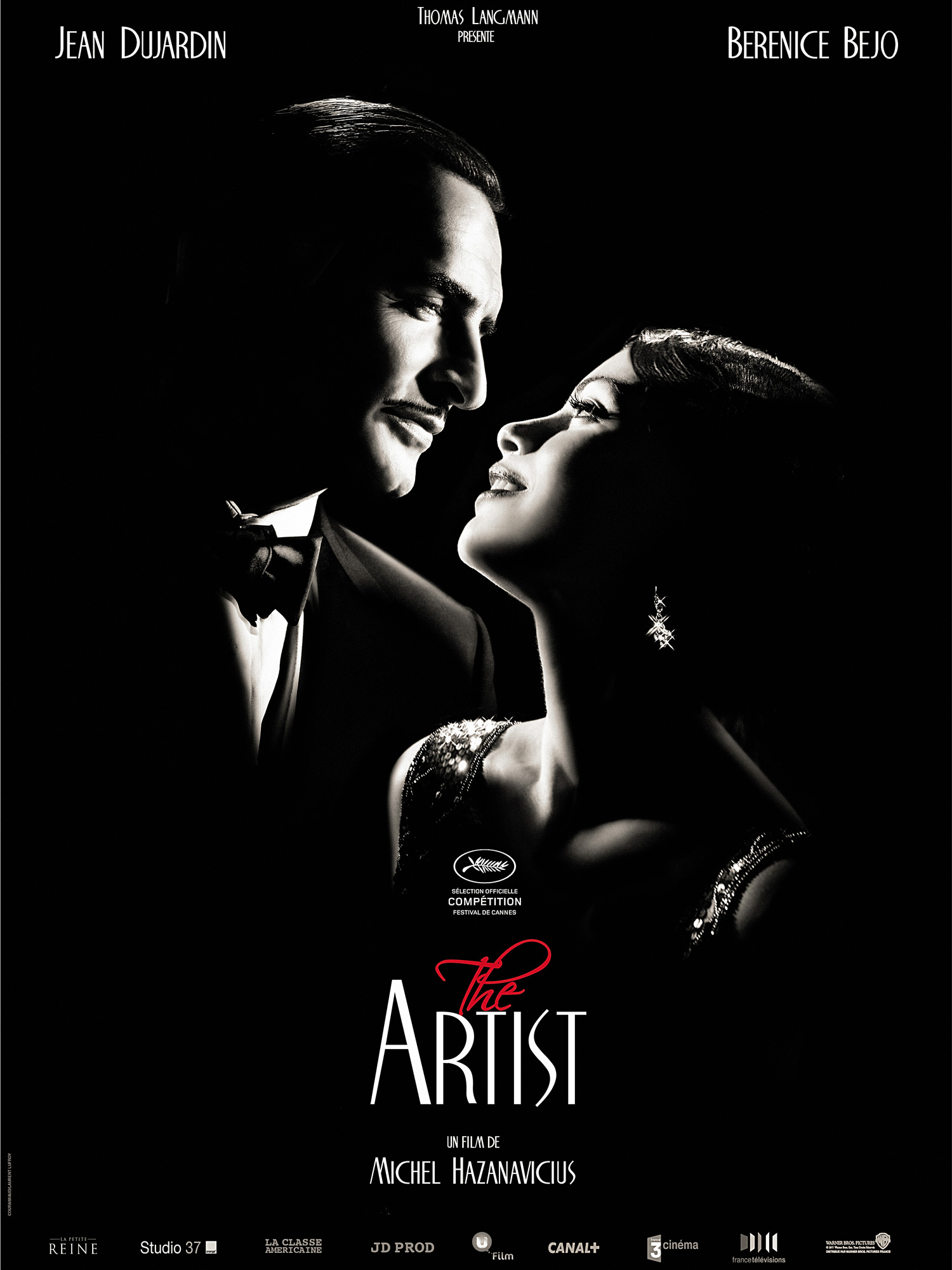
The Artist (2011)

For every ‘coming of sound’ there is an ‘end of an era’. The old has to make way for the new. Technology is constantly evolving and this will continue to happen. Black and White film was vanquished by colour, VHS was eliminated by DVD and DVD is slowly being pushed to the sidelines by Blu-Ray and electronic film in the way mp3s have sidelined CDs. The question now, is will 3D film triumph over 2D? The difference between now and the 1920s and 30s, is that we’re used to the evolution of technology; we see it coming and adapt along with it. The coming of sound was the first real change that cinema had faced, and not everybody was ready for it. Silent actors had never needed to rely on their voices; some of them didn’t have the voices to suit the characters they were meant to play. Technology hadn’t really caught up meaning that scenes had to be placed around objects such as plant-pots in order for the crew to not so subtly hide microphones. The use of language also stopped films from being universal. It was massive learning curve for everybody involved, but did a French film such as The Artist (2011) become as successful as it did due to the adoption of the style of silent film disabling the language barrier?
The future will always be viewed with uncertainty, but we have the power to view the past with hindsight, which makes recurring styles so easy. Fashion constantly brings back old styles, knowing what worked and what didn’t from each time period. Film and television constantly make period dramas or comedies. A period piece is not necessarily a Victorian drama but could be as recent as the 1960s, or even 1980s. Mad Men is a prime example of an incredibly popular period television show, while No Country for Old Men (2007) is a prime example of a popular, critically acclaimed period film set as recently as the 1980s. But The Artist has gone one further. Michael Hazanavicius, the writer and director, did more than make a period film; he made a film in the same style. With films regularly filled with lengthy dialogue, the concept of adding restrictions allows for other elements of the film to flourish. Seeing a well acted, clever and warming silent story is both refreshing and charming.
The Artist is a French film, written and directed by Michael Hazanavicius and starring Jean Dujardin and Berenice Bejo. Dujardin plays George Valentin, a silent film star and face of Kinograph studios. Bejo’s character, Peppy Miller earns her first role as an extra on one of his films, but not before she gets in the paper posing next to him at the premiere of one of Valentin’s previous films (Does this scene elude to reality stars and ‘It’ girls who have little talent but plenty of fame? There’s an argument for it, but probably not). Their short time working together seems full of fun, affection and a real spark.
As time wears on Miller gets larger roles until Kinograph signs her, this happens as the talkies begin to take off. Miller becomes a star and Valentin, the previously arrogantly charming leading man gets hit hard by the lack of work and the economic depression and begins to spiral – For every ‘coming of sound’ there’s an ‘end of an era’.
The Artist uses such a simple idea, the rise of one star parallel to the fall of another, along with what could be seen as a gimmick of such an out-dated style, it succeeds in getting the reactions it wants from the audience. But not just any audience, The Artist seems to suit all demographics from young to old, all seemed to laugh, cheer and even clap.
The film is based at the height of the golden age of Hollywood, during the time of the Hollywood studio system. Due to this a bit of knowledge about the Hollywood studio system might help (for example that stars signed contracts with the studios and not for individual films), but isn’t completely necessary. Hazanavicius does well to avoid the politics and bureaucracy of the studios and stay focussed on the characters.
Having won three awards at the Golden Globes and earned 12 BAFTA nominations, and yet despite this there have still been some unhappy customers. A cinema in Liverpool has had to issue refunds to customers who were unaware that the film was in black and white and was silent. Due to limited release, The Artist has failed to break to the top of the box office charts, but the more praise it gets on the limited releases, the wider the general release will be.
The very simple, yet heart warming story of The Artist is contrasted with the over-the-top acting. With no dialogue to express the feelings of the characters, they rely on their facial features and use them in a way that we as 21st century audiences aren’t used to. We’re forced to read the expressions of the actors’ faces (every part of their faces, including the incredibly excessive use of eyebrows). Audiences are forced to look up from their phones and keep their eyes glued to the screen. The beautiful chemistry between Bejo and Dujardin is complimented with great minor roles from well known faces. John Goodman plays the studio head that goes from powerless in comparison to the star power beheld by Valentin and Miller, to the man holding all the cards due to the forceful hand of the general public. Malcolm McDowell has a small meeting with Peppy Miller at the start of her career and James Cromwell plays Clifton, Valentin’s ever loyal driver and friend. Despite the incredible acting power from the cast, they seem shadowed by the comedy factor brought along by Uggie the dog, doing tricks and proving to be Valentin’s best friend.
The Artist is a truly heart-warming, funny and classy film which, along with its unique selling point, will no doubt win more awards as the season continues. It is worth noting that no matter when a film is set, it will always be a document for the time period that it was made. So after looking back in time, you might want to question, in 80 years will we all be watching a refreshingly two dimensional film about one man’s struggle to stay afloat after James Cameron changed the way that the film industry made films by promising to only make 3D films for the rest of his career?
Written by Edward L. Corrigan on 19/01/2012

Saturday, 31 December 2011

The Girl with the Dragon Tattoo (2011)


Whether it is due to financial gain, artistic idealism, or whether it is born out of a necessity to bring alternative stories to wider audiences, Hollywood has a knack for remaking films made before a certain date or made by another society. Recently a Swedish book, made into a Swedish film, was remade, Let Me In (2010) is, despite some very good performances, one of the most pointless remakes to date. The film is so visually similar to the original Let the Right One In (2008) and the only plot differences (made in an attempt to tone down the perversion) only succeed in making the film more depressing.
David Fincher’s The Girl with the Dragon Tattoo (2011) succeeds where others fail because rather than a remake of a recently made film, it goes straight to the source (Stieg Larsson’s internationally acclaimed posthumously published novel by the same name) and is treated like a literary adaptation. 
The now well known narrative follows Mikael Blomkvist (Daniel Craig), a disgraced investigative journalist as he attempts to uncover the mystery surrounding a 40 year old murder. He is assisted by the eponymous Lisbeth Salander (Rooney Mara), a ward of the state, computer hacker and personal investigator. Fincher doesn’t wait to impress but dives straight in with the opening credits. Accompanied by Led Zeppelin’s Immigrant Song performed by Trent Reznor, Atticus Rose and Karen O, the tone (along with the expectations) is set. Steven Zaillian’s screenplay is a great adaptation of the novel, including many set pieces that the original Swedish film missed out on, as well as making some subtle changes so that audiences well versed with the original book and film will still have some surprises awaiting them. Although the language is changed, the setting of Sweden is not, creating a very familiar aesthetic, but due to the other differences, this is more of a testament to Larsson’s book than a degradation of Fincher’s originality. This is by no means Fincher’s first literary adaptation, or his first film about serial killers for that matter, and he should achieve the same accolades as he did with Fight Club (1999) or Se7en (1995).
The setting of Sweden demands accents in an attempt not to ‘Americanise’ the film, and in general the accents (a second best to using the original language) don’t falter, Craig is the only actor not to attempt an accent. He has proved in previous films that he is able to adapt his voice sufficiently, so the choice not to attempt one is rather odd. Film-wide Swedish accents would have been better although he plays Blomkvist well enough for this not to be too heavy a problem. Also, audiences have already extended their belief to include Swedish nationals speaking English, so one failed accent isn’t too much more for them to accept. Craig’s Blomkvist is a great portrayal, he’s not a hero, he’s a normal human being, and so he’s easy to emphasise with. The film is full of fantastic actors in minor roles, who all step up to fill the film with great performances. In a strange exception to the rule, the remake is better than the original in almost every way. The one difference however is a major one.
With no disrespect to Rooney Mara, who transformed magnificently into Lisbeth Salander and had performed brilliantly, but the portrayal of Salander let the film down. The appeal of the book and the first film was Salander, most films rely on stereotypes so that audiences can understand them with little backstory, ‘The Girl with the Dragon Tattoo’ is part of a trilogy and so is able to prolong the exposition of the characters and have the audience or reader wait to find out more about them. Salander is supposed to be a withdrawn, mysterious character, drawing the curiosity of the audience, instead she’s open and hides very little about herself. She’s also supposed to be (despite being a ward of the state) independent, instead she comes across as needy and dependent, she not only cares what people thinks, she asks permission to do things that in the other portrayals, she just does. In a patriarchal society (The original Swedish title means ‘Men who Hate Women’) it was an independent woman who drew the interest from the audience, not the murder mystery or her male counterparts. In the American adaptation Craig’s Blomkvist is the more interesting character. This single disappointing fact stops Fincher’s adaptation from being incredible and stops it from being a better film than the original Swedish adaptation.
The way that it was adapted and the over-all film, however, show what can be done with the second and third installments of the Millennium trilogy and it will be interesting to see how those can be compared.
Written by Edward L. Corrigan on 31/12/2011

Thursday, 1 December 2011

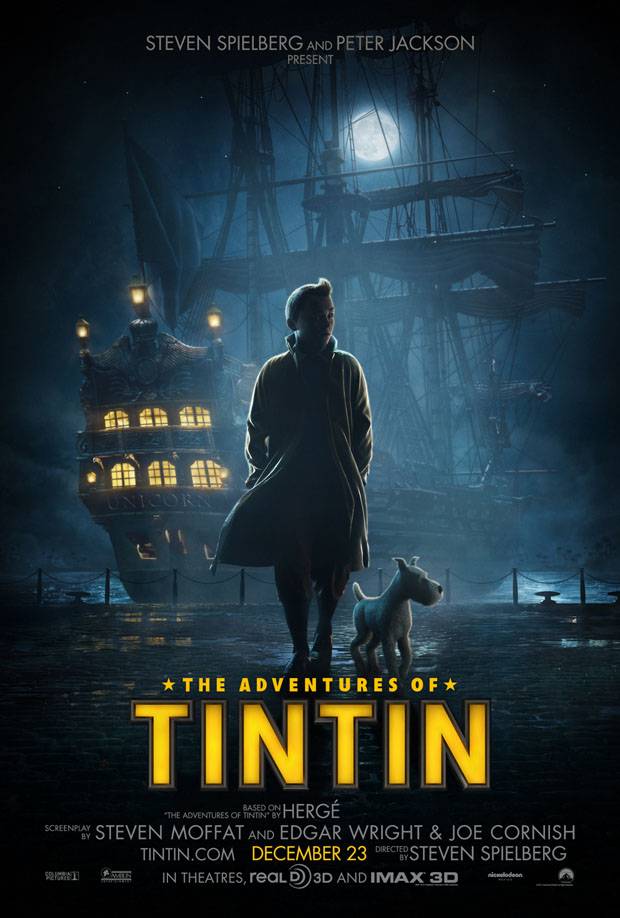
The Adventures of Tintin: The Secret of the Unicorn

Robbie Collin of the Telegraph reported of Steven Spielberg:
“There’s not a lot of films I’d watch that are made over the past 20 years, because I’m much more of a romantic,” he said in a recent interview, adding later: “I think producers are more interested in backing concepts than directors and writers. I don’t think that’s the right way of making a decision about whether you’re going to back a film or not.”
Collin continues to point out the hypocrisy of this statement considering the amount of shocking remakes and terrible sequels that Spielberg has backed, produced or directed in recent history. No amount of bad films will ever be able to take away from the grandeur of some of Spielberg’s previous films: Saving Private Ryan (1998), Schindler’s List (1993) or the film that coined the term ‘blockbuster’ Jaws (1975). Having said that the list that Collin collates is large and in many cases irrefutable. Notably that list included Indiana Jones and the Kingdom of the Crystal Skull (2008) and The Adventures of Tintin: The Secret of the Unicorn (2011). Audiences and critics agreed that the final Indy installment was shocking, but they disagree on the adaptation of Herge’s young hero. With the possibility of sequels, people have dubbed Tintin as Spielberg’s new Dr. Jones. But will Tintin get the same treatment, or has he already?
In regards to topics such as film, an entertainment medium so widely accessible by such a wide range of demographics, that critics look too heavily into topics and are too academic. Are the opinions of critics too far removed from those of the general public? In the case of Tintin it would appear so. It topped the UK box office in its opening weekend taking £6.7 million and yet it failed to get any outstanding reviews. The majority of the reviews were in fact incredibly damning. The more probable reason for the difference is fandom. Thousands of fans of the original comic books would have gone to see it in droves and judging by the reviews, the critics were all fans. Fandom can be a blessing and cause many problems for filmmakers. The blessing is in the box office sales, the problems come afterwards with opinions. Whereas fans of sports teams support that team through all challenges it faces, once a film is released, it faces no more challenges. With no more challenges, opinions of it shouldn’t change; it doesn’t get better or worse. So if or when a remake or sequel is released it is judged comparatively by the high regard fans have for the original (whether that high regard was earned legitimately or not). The reasons for fandom of the original brings up the question of auteur-ship and who made it as good as it was. Was it the director, the screenwriter, the original writer or the star? The quality of the original product will grow with nostalgia until it is often not possible to out-do. The opinions of fans are never unbiased and therefore are possible to be swayed. If filmmakers can get fans on-board early during the production process, this will affect their opinions when the film comes to be released. In this age of internet blogging and twittering opinions fans can make or break a film. In this case, all critics seemed to be massive fans of the original Herge comics and Spielberg couldn’t live up to the hype. 
Tintin started life as a figment of the imagination of Belgian comic book creator Herge (real name Georges Remi). Tintin was a young investigative journalist who constantly found himself in troublesome adventures with, or because of his friends. He was always accompanied by his dry-witted dog Snowy who regularly came to his aide and as the comics progressed he accrued more friends, a grumpy alcoholic sailor Captain Haddock, a half deaf scientist Professor Calculus and the dim-witted detectives Thomson and Thompson.
The film spans three of the comic books: The Crab with the Golden Claws (1941), The Secret of the Unicorn (1943) and Red Rackham’s Treasure (1944).
The film was animated using the technique of motion-capture, which due to the involvement of producer Peter Jackson and actor Andy Serkis isn’t much of a surprise. Motion capture (capturing the motions made by the actors and animating it from there) adds more human movement than the comics had while not fully taking away from the animation.
Spielberg’s directorial projects cannot be boxed into any particular style, and even if they could, animation would not be part of that box. However this film has his stamp all over, even to the point that it makes references to some of his previous work. While Tintin does not have much of a fan-base in the States, a comic was given to Spielberg on the set of Indiana Jones after somebody connected the similarities of the two characters, it was only a matter of time before he, the one director that Herge would have wanted to adapt Tintin, did just that. Peter Jackson, the producer and another big Tintin fan, was the man who persuaded Spielberg to use the mo-cap animation technique which, which although upset die-hard fans of the original art, worked far better than the originally planned live action adaptation.
It only takes a brief glance at the credentials of the writing team to see their personal influences. Steven Moffat, a Scottish writer, has been writing for television for decades but his most recent acclaims include Dr. Who and the BBC adaptation Sherlock. Edgar Wright, and English writer and director, wrote the hit television series Spaced and wrote and most notably wrote and directed the first two installments of the ‘Blood and Ice-cream trilogy’ Shaun of the Dead (2004) and Hot Fuzz (2007). The final writer is Joe Cornish, one half of the comedy team Adam and Joe who has recently transcended to film by writing and directing the critically acclaimed Attack the Block (2011). The script succeeds where many adaptations fail, it allows for personal influences and inspirations while keeping the key characterisation. The film is by no means entirely faithful to the original texts, but when trying to fit three comics into one film that would never have been possible. It does beg the question why try to fit three stories into one? What’s wrong with the individual stories?
However the key in a series spanning over 20 comics is the characterisation, and the writers captured the heart of the characters. The comedy elements all seemed childish and slapstick, but again, that fits with the comedy of a comic book series aimed at a young demographic.
Tintin, the earnest young reporter is brought to screen by Jamie Bell. Bell retains unfaltering moral compass and keeps Tintin on the straight and narrow. Andy Serkis, as ever, jumps head first into his performance as Captain Archibald Haddock stealing the show from under Tintin’s nose with shouts of “Blistering Barnacles” and “Thundering Typhoons”. Although Serkis plays Haddock with a Scottish accent this fits with the rest of the British cast keeping very English accents. Thomson and Thompson are played by the inseparable Simon Pegg and Nick Frost. This proven partnership isn’t given enough time to shine. While Herge primarily used them as comic relief from some of the more serious issues he brought to light, their clumsy slapstick comedy seemed outdated and unnecessary. Captain Haddock and Snowy provided more than enough comedy next to the straight-laced Tintin.
Daniel Craig hasn’t seen many villainous roles in recent years, and when they have been villainous, they’ve often had a good side. The quality and enthusiasm of Craig’s Sakharine/Red Rackham makes you wonder if he’s bored of playing the hero and relishes the chance to be the villain again.
The film achieves a very European aesthetic while the writing team and cast create a very British feel. The film opens in an unnamed European marketplace which looks a lot like Brussels, Herge’s hometown, while the dialogue (and specifically, the use of the word ‘quid’) alludes to an almost cockney London. The film opens very strongly with a credit sequence that recreates scenes from a number of the original comics followed by the aforementioned marketplace scene which features more than just a Brussels-esque backdrop to reference the origins of the story. Little time is wasted before diving straight into the narrative; Tintin buys a model of the 17th century ship The Unicorn which, only after the purchase, is highly sought after. After taking it home he finds a cryptic scroll inside it, but before he can act on it he’s pick pocketed and kidnapped. His craving for the truth behind a possible story drives him from being a prisoner on Captain Haddock’s mutinied ship (along with Haddock himself), to the African desert and after a short stop in the fictional city of Bagghar, he finally back to the unnamed European city. Although the end starts to drag on a bit there are some truly remarkable scenes. While in the desert Haddock starts to sober up and begins to remember the story of his ancestor Sir Francis Haddock and Red Rackham’s treasure. Haddock’s mad re-enactment of this relived partly through him and partly through flash-backs brings excitement and an extra level of adventure to what was starting to become a rather linear story. Although die-hard fans will be annoyed that this action was relived in the desert as opposed to in the Marlinspike Estate, it featured at the right time for the film.
Realistically this film was never going to please everyone. Nostalgia will either have put the original comics on a pedestal, or will help you find childish slapstick humour funny again. The film will have either deviated from the original texts too much to satisfy, or you’ll find that what excited you as a child no longer does. However it works well as a children’s film and the big question, is how will it be received in America? American audiences who didn’t grow up with Tintin will not have the pre-conceived nostalgia that European audiences have. There won’t be Herge fans running to the cinema in their thousands or turning their noses up. 
Will The Adventures of Tintin: The Secret of the Unicorn work as a stand-alone film to an audience unaware of the adaptation? Will a new generation of previously unknowing Americans find the original comics and be as enthralled as we were growing up in Europe? The answers to these questions will determine whether or not Spielberg succeeded in making Tintin as a film, and we won’t know the answers until the State-side release later this month.

Written by Edward L. Corrigan on 1/12/2011

Friday, 25 November 2011

Margin Call (2011)

Margin Call (2011) is a thriller set in a tumultuous 24 hours for an un-named Wall Street firm during the 2008 financial crisis. It opens with staff-cuts to the entire floor. 80% of the staff are being fired, among them is Stanley Tucci’s character Eric Dale. Dale works in Risk Management and thinks he’s stumbled upon something big, but he’s unable to complete his assessment because as the firm remind him as politely as possible, it’s not your problem any longer. In an attempt to do the right thing he hands his former subordinate, Peter Sullivan (Zachary Quinto) a USB with his workings saved onto it. Sullivan, a former rocket scientist has no trouble finishing what Dale started but what he finds out is bigger than he expected. The findings are constantly reported to higher pay-grades as they all struggle to plug the leak in a sinking titanic.
There is constant talk of ‘MBS’ (mortgage backed securities), ‘historical volatility levels’ and ‘leverage’. To anybody who hasn’t been involved in investment banking this may not mean a lot. Luckily it doesn’t mean a lot to many of the higher paid people in the firm either who are constantly asking to have the situation clarified in plain English until everything, including the wider situation, is explained through a series of metaphors and analogies. To teach a wide ranging audience about the comings and goings of high betting Wall Street firm, would be too hard a task for a mere film, but the situation is explained and re-explained in a way that’s real to those who know, and understandable to those who don’t.

Margin Call is to Wall Street, what The Wire (2002) was to crime. This doesn’t mean that Margin Call is a gritty, all-encompassing drama, but that it attempts to change perceptions. The Wire told audiences that not all drug dealers were bad-guys and not all cops were good, Margin Call tries to tell an increasingly anti-Wall Street society, that these investment bankers aren’t all the caricature villains they’re made out to be, but that they’re human beings with both good and bad qualities. 
Stanley Tucci plays Eric Dale, an engineer turned risk assessor. He dedicated 19 years of his life to the firm. In this incredible ensemble, Tucci’s role is the first to draw sympathy. With all the surrounding anti-Wall Street Media, we, as an audience, start the film with generally bad pre-conceived notions of all the characters. Dale doesn’t look like he belongs in the same category, he doesn’t appear to be flash or cocky and after he’s been let go his reactions seem genuine.
Zachery Quinto plays Peter Sullivan, a former Rocket Scientist at MIT turned junior risk assessor. As the walls start to crumble Sullivan’s concerns seem to be directed in the right place. He’s modest and he cares for the futures of his colleagues and the everyday people on the street.
Penn Badgley plays another junior employee and friend of Sullivan, Seth Bregman. Bregman only seems to be along for the ride because he’s Sullivan’s friend, he doesn’t contribute anything to the actual situation. There is one point that he earns sympathy, but other than that he isn’t particularly likeable. He finds it necessary to constantly bring up the point of earnings. He tells Sullivan how much he earned, how much his boss Emerson earns and questions how much the CEO earns. Unlike other characters who have a history in other fields, he only ever wanted to be an investment banker, and it seems apparent that the only thing drawing him to that career was the financial gain. 
Paul Bettany seemed to kick-start his career with either overly likeable (A Knight’s Tale -2001) or overly nice (Wimbledon -2004) characters but really earned his stripes with the unnamed gangster in Gangster No.1 (2000). Since the mid to late 2000s though, he’s played around with villains or anti-heroes. His choice of films has often been suspect, but he’s proven he can play both heroes and villains of pieces. This history stands him in good stead for his role has Will Emerson. Emerson appears very callused by the nature of his work which gives him a very cynical view of the general public and his industry. This cynicism often paints him as the banker ‘Occupy Wall Street’ protestors have come to hate, but the same cynicism grounds him and keeps him loyal where it seems to matter. The film is full of incredible performances but Bettany’s is one of the best.
Kevin Spacey is one of the central actors of the ensemble. He plays Emerson’s boss Sam Rogers. While Dale and Sullivan are nice guys, they’re fairly junior, Rogers has a more vital role in the firm, while keeping his integrity. That isn’t to say he’s naïve, the way he deals with the cuts at the opening clarify that, but his attempts to stand up to his superiors, his honesty with his staff and his emotion in regards to his personal life let the audience know that he is the moral compass they can follow. Spacey’s performance in this role is expectedly fantastic.
Jared Cohen (Simon Baker) is the head of securities Sarah Robertson (Demi Moore) is the head risk and they both comes across as selfish and two of the key people to blame for the firm’s current problem. Cohen is more than comfortable doing the morally wrong thing for the safety of the company while Robertson is constantly on the back-foot defending her situation. While Baker’s performance provokes only feelings of distain, Moore’s is more ambiguous. She is by no means likeable, but it is clear that she is the only woman this high up in a male dominated business and it seems that she had to become this unlikeable to get to that position.
Jeremy Irons flies in as the enigmatic CEO John Tuld. The enigma is whether the audience like him or not. His business methods aren’t likeable, he’s not intelligent enough to have worked his way up to his position (as he states in the board-room) and his perception of money proves how detached he is from normal society. And yet his calm charisma and his open friendliness to the staff below him make him seem the complete opposite of the greedy, selfish CEOs the media would have us believe are in charge of all Wall Street firms. Just when you think you’ve heard a Gordon Gekko style quote: “There are three ways to make a living in this business: be first, be smarter, or cheat.” Tuld follows up by saying he doesn’t believe in cheating. He isn’t a caricature, but his dislikeable features are all there. Like Bettany’s role, Irons’ performance is another to keep an eye on.
New York is used to represent the anonymous general public who are to be affected by the events unfolding throughout the film. The beautiful skyline is often shown as separate from the characters. With the exception of two or three short scenes there is either a great height or a car or building separating the principle cast from the city, and the scenes that are exceptions to this involve characters sympathetic to those who’ll be affected by the aftermath. New York, like London and many other cities, is a melting-pot of cultures and communities and is a great representation of the unsuspecting citizens. J.C Chandor, the film’s writer and director draws this representation incredibly and makes use of the height of the sky-scraping offices to capture the beauty of the city in his symbolism.
This is Chandor’s first feature film; his history was previously in documentaries and adverts. His father worked on Wall Street for 40 years, which gives Chandor an edge that makes his perception of Wall Street more human and more real in comparison to films such as Wall Street (1987). The direction is great, but it’s the writing that really proves his worth. The script is full of moving and insightful speeches. Emerson’s speech about how the public will view them, Tuld’s briefing room dialogue and Rogers’ speeches to his staff are just a few gems within an exceptionally intelligent script.
So what is being said? Is Chandor blaming the greed of the high-flying investment bankers? Or is he defending them? Greed doesn’t seem to enter the equation of the characters (with the exception of Seth) and because of this lack of greed (that is so consistently present in the media), audiences might think he’s defending the bankers. There is never really a defence though. Chandor’s film tells the public that there are two sides to every coin, and not to tar everyone who works on Wall Street with the same brush. Just because somebody works for a corporation, it doesn’t mean they deserve the same credits and blames handed to that company. Chandor is saying that bankers are human beings, but he isn’t claiming their innocence. Even the likeable and sympathetic characters go along with the company despite knowing the exact moral implications. Rogers goes along with it under protest and Dale finds himself going along with it in order not to make his own life any more difficult than it has to be. They’re human and sympathetic characters, but they’re not innocent or righteous.
As for greed, only Seth seems to believe in Gordon Gekko’s idea that greed is good. Emerson, while on the roof of the office building having a cigarette, explains to the two junior employees that humans will always spend what’s in their pocket and explains how easy it was to spend his $2.5 million earnings of the previous year. It’s not that he craved, or still craves, more; simply that once he earned it he was able to spend it. 
Chandor also seems to be making a statement about the hierarchy of such companies. This corporate ladder that might not be visible in everyday proceedings is climbed very quickly by the audience. Everybody seems to be introduced as somebody else’s boss, the layer-cake is clear.
As the ladder is climbed, the characters seem that little further out of touch with the employees. Each time the situation is explained to another boss it needs to be clarified and simplified once more until the top is reached and Tuld asks Sullivan to explain in the same way he’d explain it to a child or a dog. Both the apparent ignorance at each level, and the constant need to take the issue higher, undermines the authority of each boss. The power that each character feels (or wants to feel in the case of the more junior characters) is far from real power.
Margin Call has the potential of being praised or condemned: The film never focuses on the so-called 99%, the general public. It doesn’t ignore us, but it doesn’t really introduce us. Those who see the bankers as the enemy can claim that Chandor is defending them. Sim Segal, writing for Forbes tore the film to ground for the use of ineffectual arguments and half-truths to change perceptions of the actual events of 2008. Although Segal raises some interesting points, his argument is let down with some entirely ill-perceived thoughts of specific scenes. David Denby, writing for the New Yorker, picks up some very similar points but reads them in a completely different way finishing his review with:
“If Wall Street executives find themselves at a loss to understand what the protesters outside are getting at, they could do worse than watch this movie for a few clues.”
Whichever you read the sub-texts, the film is worth a watch on the merits of the acting and the writing alone.
Written by Edward L. Corrigan on 25/11/2011